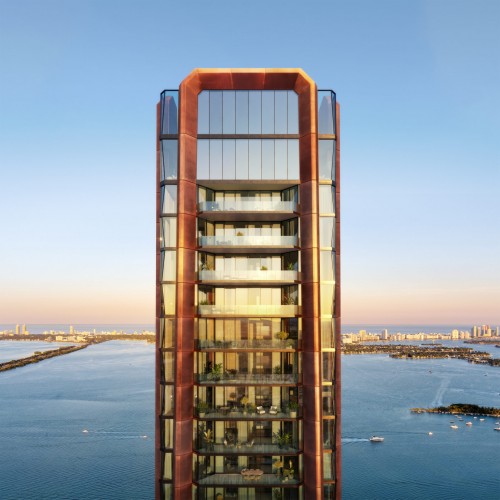
Branded Residences Miami — Comparison Guide
Full comparison of Miami's branded residential market — 12 projects across bayfront, oceanfront and supertall.
Independent real-estate website · Inquiries handled by Kyle Gilligan · Same-day response
Miami Branded Residences at a Glance
| Building | Brand | Neighborhood | Starting Price | Est. Completion | Key Amenity |
|---|---|---|---|---|---|
| Villa Miami | Major Food Group | Edgewater | From $6M | 2027 | Residents-only MFG restaurant |
| Baccarat Residences | Baccarat | Downtown (Miami River) | Upon request | Tower 1 2024–2025; Tower 2 later | Upon request |
| Cipriani Residences | Cipriani | Brickell | Upon request | 2026 | Cipriani residential service and restaurant |
| Aston Martin Residences | Aston Martin | Downtown riverfront | Upon request | Delivered 2024 | Aston Martin-designed interiors |
| Bentley Residences | Bentley | Sunny Isles | Upon request | 2026 | In-unit car lifts |
| Four Seasons Residences | Four Seasons | Brickell / Surfside | Upon request | Delivered (resale) | Hotel-integrated Four Seasons service |
| Waldorf Astoria Residences | Waldorf Astoria | Downtown | Upon request | 2027 | Waldorf hotel services |
| Mandarin Oriental Residences | Mandarin Oriental | Brickell Key | Upon request | 2030+ (in planning) | Upon request |
| Pagani Residences | Pagani | North Bay Village | Upon request | 2028 target | 240 ft bayfront boardwalk |
| Aman Residences | Aman | Mid-Beach (Faena District) | Upon request | 2027 target | Aman hospitality program |
Starting prices for other buildings are shown as "Upon request" where a current figure could not be verified. Timelines are developer targets and may change.
The Branded-Residence Comparison Table
Miami leads the U.S. branded residential market. Twelve projects define the current cycle:
| Project | Location | Type | Service Program | Delivery |
|---|---|---|---|---|
| Villa Miami | Edgewater | Bayfront | Major Food Group residential dining, Italian thermal spa, private dock | 2027 |
| Cipriani Residences | Brickell | Bayfront | Cipriani residential service, restaurant | 2026 |
| Aston Martin Residences | Brickell | Bayfront | Aston Martin branded interiors, concierge | Delivered 2024 |
| Waldorf Astoria Residences | Downtown | Hotel-attached supertall | Waldorf hotel services | 2027 |
| Edition Residences | Edgewater | Bayfront | Marriott Edition wellness program | 2027–2028 |
| Missoni Baia | Edgewater | Bayfront | Family-focused amenity program | Delivered 2022 |
| St. Regis Residences | Sunny Isles | Oceanfront | St. Regis butler service | 2026 |
| Bentley Residences | Sunny Isles | Oceanfront with in-unit car lifts | Bentley branded interiors | 2026 |
| Perigon | Miami Beach | Oceanfront | OMA-designed, full-service | 2026–2027 |
| Five Park | Miami Beach | Bayfront/park | Arquitectonica, park-adjacent | Delivered 2024 |
| Mr. C Residences | Coconut Grove | Bayfront | Mr. C / Cipriani family service | Delivered |
| Vita at Grove Isle | Coconut Grove | Island bayfront | Marina access, low density | 2026 |
How To Read the Table
Three things separate stronger from weaker branded residences in Miami: (1) service vs licensing — does the brand run the building's operating program or just lend its logo; (2) residence count — fewer units per amenity dollar delivers better living and stronger resale; (3) location category — bayfront, oceanfront, and hotel-attached supertall are different products serving different buyers.
Branded Residence vs Luxury Condo — What Actually Changes
The distinction buyers ask about most is what a brand adds over a well-built non-branded luxury condo. Structurally, three things change. First, staffing: a branded building's service program is written into the operating budget, so the front desk, concierge, housekeeping and food-and-beverage teams are contracted rather than assembled ad hoc by an association board. Second, standards enforcement: the operator has reputational exposure and typically holds approval rights over service levels, common-area upkeep and, in some buildings, short-term rental behavior. Third, program design: amenity floors in branded buildings are planned around a service the operator already runs elsewhere — a restaurant group builds a functioning kitchen and private dining rooms, a hotel brand builds arrival sequences and spa flow.
The trade-off is cost. Branded buildings carry higher monthly assessments because those teams are paid for by owners, and that difference persists for the life of the building. The practical test is whether you will use the service. A buyer who is in residence a few weeks a year and wants arrival hospitality is usually better served by a hotel-integrated brand; a full-time resident who entertains often gets more out of a residential-only building with a serious dining program. A buyer who mainly wants a large, well-located floor plan and does not intend to use amenities may simply be paying a premium for a name.
Which Miami Branded Residence Brands Are Most Reputable
Reputation in this market is best measured by whether the brand operates hospitality businesses rather than licenses a trademark. On that basis Miami's branded inventory falls into three tiers.
Operator brands — Major Food Group, Cipriani, Aman, Waldorf Astoria, St. Regis, Ritz-Carlton, Four Seasons and Marriott Edition — run restaurants, hotels or both, and their residential programs are staffed by teams accountable to the parent operator. These carry the most durable premiums because the service is verifiable before you buy: you can eat in the restaurants and stay in the hotels.
Design-partnership brands — Aston Martin, Bentley, Pagani, Missoni, Armani — supply interior direction, materials specification and marketing reach. The buildings are frequently excellent, but the brand does not staff the building, so the service program is whatever the developer and management company build. Price the design, not the service.
Developer-house brands — projects such as Mr. C and Ora by Casa Tua sit between the two, where a family hospitality business extends into residential at smaller scale. Diligence here means asking who signs the service contract and for how many years the brand agreement runs, since a brand that can exit in year five is a different asset from one locked in for twenty.
How To Compare Two Buildings Properly
Once you have a shortlist, five questions resolve most decisions. What is the residence-to-amenity ratio — how many owners share the pool deck, spa and dining room? Is there a hotel component sharing those amenities? Who operates the service program, and is that agreement disclosed in the condominium documents? What is the current monthly assessment estimate per square foot, and what does it include? And what is the realistic delivery window, given that pre-construction dates in Miami commonly move by two to four quarters?
Answering those five for each building produces a cleaner comparison than brand prestige alone. If you want that done for a specific shortlist, request a written comparison using the form on this page, or schedule a private tour to walk the shortlisted sales galleries in one day.
Comparing Floor Plans and Penthouse Tiers
Brand aside, the residence itself decides how the building lives day to day. Half-floor plates typically deliver two exposures, full-floor plates deliver four and a private elevator arrival, and penthouse tiers add ceiling height, private outdoor volume and in several Miami buildings a private pool. For the Villa Miami collection specifically, review the floor plans and square-footage ranges and the penthouse tier before comparing headline prices across buildings — price per square foot is only comparable once plate type and outdoor area are matched.
The Big Three Compared — Villa Miami vs Aman vs Waldorf Astoria
At the top of the Miami branded market three projects are consistently shortlisted against each other. The decisive difference is structural, not aesthetic: Villa Miami is the only one of the three with no hotel component, so its service program, amenity deck and dining room serve roughly 70 owners rather than owners plus rotating hotel guests.
| Category | Villa Miami | Aman Miami Beach | Waldorf Astoria |
|---|---|---|---|
| Hospitality model | Major Food Group residential program — operator-run, residents-only | Aman hotel-integrated service — shared with hotel guests | Waldorf Astoria hotel service — shared with hotel guests |
| Building program | Single-program residential (70 residences) | Aman hotel + residences (mixed-use) | Waldorf hotel + residences (supertall mixed-use) |
| Residence count | ~70 residences | ~22 residences + ~56 hotel keys | ~360 residences + ~205 hotel keys |
| Neighborhood | Edgewater — mainland bayfront | Faena District, Miami Beach (island oceanfront) | Downtown Miami — inland supertall |
| Waterfront | Direct Biscayne Bay frontage | Atlantic oceanfront | No direct water frontage |
| Signature dining | MFG residents-only restaurant + private dining | Aman signature restaurants (open to hotel guests) | Peacock Alley + hotel F&B (public) |
| Delivery | 2027 — pre-construction | 2027 — pre-construction | 2027–2028 — pre-construction |
| Price range | $6M — $55M | ~$25M — $100M+ | ~$2M — $50M+ |
| Privacy | Resident-only tower — no hotel lobby, no guests | Shared hotel/residence circulation | Shared hotel/residence circulation |
| Amenity share | Amenities exclusive to ~70 owners | Amenities shared with hotel guests | Amenities shared with hotel guests + ~360 owners |
Aman and Waldorf Astoria are hotel brands extending into residential; Major Food Group is a restaurant operator building a residential program from scratch. For a buyer whose life centers on entertaining and dining at home, that is a different — and for many, better — proposition than adapted hotel food and beverage. For a buyer who wants arrival hospitality a few weeks a year, the hotel-integrated model is the stronger fit.
Every Miami Branded Residence Launching Through 2026–2027
The full current pipeline, by brand, neighborhood and buyer fit:
| Project | Brand | Neighborhood | Notes |
|---|---|---|---|
| Villa Miami | Major Food Group | Edgewater (bayfront) | 70 residences, Italian thermal spa, private bayfront dock, MFG residents-only restaurant. |
| Aston Martin Residences | Aston Martin | Downtown Miami (river/bayfront) | 391 residences. Design partnership with sail-form silhouette. |
| Waldorf Astoria Residences | Waldorf Astoria / Hilton | Downtown Miami | 360 residences in a stacked-cube supertall. |
| Cipriani Residences Miami | Cipriani | Brickell (bayfront) | 397 residences. Operator-run Italian hospitality. |
| St. Regis Residences | St. Regis / Marriott | Sunny Isles (oceanfront) | Two-tower oceanfront program with butler service. |
| Bentley Residences | Bentley | Sunny Isles (oceanfront) | 216 residences with in-unit car elevator. |
| The Perigon | Independent (Shaun Hergatt F&B) | Mid-Beach (oceanfront) | 73 residences. OMA architecture, Tara Bernerd interiors. |
| Five Park Miami Beach | Independent | South Beach (park-front) | 98 residences adjacent to Canopy Park. |
| Vita at Grove Isle | Independent | Coconut Grove (private island) | 65 residences on a private island with marina access. |
| Edition Residences | Edition / Marriott | Edgewater (bayfront) | Hospitality-led bayfront residence in the Edgewater pipeline. |
| Missoni Baia | Missoni | Edgewater (bayfront) | Design partnership, family-focused amenity program. Delivered 2022. |
| Mr. C Residences | Cipriani family | Coconut Grove (bayfront) | Developer-house brand at smaller scale. Delivered. |
Where Villa Miami Sits
Villa Miami is among the most disciplined entries on the table: fewer than 70 residences (vs 200–400+ at most peers), Major Food Group running the residential dining program (not licensed), Italian thermal spa, and a true on-site private dock. The combination is not replicated at this scale in the current Miami pipeline. See individual head-to-heads:
- vs Cipriani Residences (Brickell)
- vs Aston Martin Residences (Brickell)
- vs Waldorf Astoria Residences (Downtown)
- vs St. Regis (Sunny Isles)
- vs Bentley Residences (Sunny Isles)
- vs Edition Residences (Edgewater)
- vs Missoni Baia (Edgewater)
- vs Perigon (Miami Beach)
- vs Five Park (Miami Beach)
- vs Mr. C Residences (Coconut Grove)
- vs Vita at Grove Isle (Coconut Grove)
- vs Paramount Miami Worldcenter (Downtown)
- vs Forma Residences (Edgewater)
- vs Edition Residences Miami
- vs Cipriani Residences Miami
- vs Bentley Residences Miami
Pricing
Branded residence pricing in Miami spans a wide band — from sub-$2M entry product to nine-figure trophy penthouses. For Villa Miami specifics, request the current pricing. For penthouse-tier specifically see Miami penthouse prices.
Frequently Asked — Branded Residences Miami
What is a branded residence?
A branded residence is a condominium developed in partnership with a global hospitality, fashion, or automotive brand that licenses its name and — in the strongest cases — provides operating service infrastructure (restaurants, concierge, housekeeping, spa). The strongest brands deliver real operating teams rather than just licensing a logo.
Which Miami branded residence has the best service?
The strongest service programs in Miami's branded-residence market come from brands with real operating hospitality DNA: Major Food Group (Villa Miami), Cipriani (Cipriani Residences, Mr. C), St. Regis (Sunny Isles), and Marriott Edition (Edgewater). Brands without operating hospitality history typically license a name without staffing the building's service program.
Are branded residences worth the premium?
Branded residences with real operating service infrastructure have historically traded at and resold for premiums over comparable non-branded inventory — particularly when the brand controls residential dining, spa and concierge rather than just interior design.
What's the difference between branded and licensed?
Branded means the operator runs the building's service program (Major Food Group residential dining at Villa Miami, Cipriani service at Cipriani Residences). Licensed means the brand name appears on the building but a third-party operator delivers the service. Buyers should verify which model applies before committing.
Which branded residence has the smallest residence count?
Villa Miami is among the most disciplined: fewer than 70 residences across 55 stories. Peer projects routinely run 200–400+ units. Lower residence counts deliver more amenity-dollar-per-door and stronger resale liquidity.
Which are the most reputable branded residence brands in Miami?
By operating track record rather than licensing alone, the strongest names in Miami are Major Food Group (Villa Miami), Cipriani (Cipriani Residences and Mr. C), Aman, Waldorf Astoria, St. Regis, Ritz-Carlton, Four Seasons and Marriott Edition. Each of these operates hospitality businesses directly. Automotive and fashion brands — Aston Martin, Bentley, Pagani, Missoni, Armani — are design-and-name partnerships, which is a different proposition and should be priced differently.
Branded residence vs luxury condo in Miami — what's the actual difference?
A standard luxury condo is run by a property-management company hired by the association. A branded residence adds a named operator to the building's service layer: dining, concierge, housekeeping, spa, and in some cases an in-house estate manager. In practice the differences buyers feel are staffing depth, consistency of service, and the quality of the food-and-beverage program. Branded buildings usually carry higher monthly fees to pay for that staffing, so the question is whether the service program is real and whether you will use it.
Do branded residences in Miami hold value better?
Branded inventory in Miami has historically transacted at a premium to comparable non-branded product in the same submarket, with the widest spread where the operator genuinely staffs the building. The premium narrows when the brand is licensed only for interiors. Any specific building's outcome depends on submarket supply, unit mix and the timing of delivery, so treat brand as one factor among several rather than a guarantee.
What monthly fees should I expect at a Miami branded residence?
Branded buildings in Miami generally run higher monthly assessments than non-branded peers because staffing, food-and-beverage infrastructure and spa operations are carried by the association. Exact figures vary by building and residence size and are disclosed in the condominium documents; ask for the current budget before contracting.
Which Miami branded residence is best for a full-time resident?
Buildings without a hotel component tend to suit full-time residents best, because amenities are not shared with rotating hotel guests. Villa Miami (Edgewater), Missoni Baia (Edgewater) and Five Park (Miami Beach) are residential-only. Waldorf Astoria, St. Regis, Aman and Ritz-Carlton operate hotel-integrated models that favor part-time owners who want arrival service.
For the 2026 new-construction shortlist see best new construction Miami 2026. For the project this site covers in depth, start with Villa Miami, then the current price list and the Edgewater sales gallery.
Head-to-Head Comparisons
- Villa Miami vs 888 Brickell Miami
- Villa Miami vs Aman Residences
- Villa Miami vs Aston Martin Residences
- Villa Miami vs Baccarat Residences Miami
- Villa Miami vs Bentley Residences Sunny Isles
- Villa Miami vs Cipriani Residences
- Villa Miami vs Edition Residences Edgewater
- Villa Miami vs Elle Residences Miami
- Villa Miami vs Five Park Miami Beach
- Villa Miami vs Forma Miami Residences
- Villa Miami vs Four Seasons Residences Miami
- Villa Miami vs Mandarin Oriental Residences Miami
- Villa Miami vs Missoni Baia
- Villa Miami vs Mr. C Residences
- Villa Miami vs Ora by Casa Tua
- Villa Miami vs Pagani Residences Miami
- Villa Miami vs Paramount Miami Worldcenter
- Villa Miami vs Perigon Miami Beach
- Villa Miami vs Ritz Carlton Residences Miami Beach
- Villa Miami vs Rivage Bal Harbour
- Villa Miami vs Shore Club Private Collection
- Villa Miami vs Six Fisher Island
- Villa Miami vs St. Regis Sunny Isles
- Villa Miami vs Standard Residences Midtown
- Villa Miami vs The Raleigh Residences
- Villa Miami vs Una Residences
- Villa Miami vs Vita Grove Isle
- Villa Miami vs Waldorf Astoria Miami
A limited collection of bayfront residences in Edgewater.
Contact us to learn more about current availability, floor plans, and pricing for specific residences at Villa Miami, 710 NE 29th St, Edgewater.
Inquiries are handled by Kyle Gilligan. Typically a same-day response.