Foreign Buyer Guide — Buying a Miami Condo as a Non-US Resident
Visa, payment, ownership structures, taxes, and FIRPTA — what international buyers need to know before contracting a Miami luxury condo.
Independent real-estate website · Inquiries handled by Kyle Gilligan · Same-day response
Foreign nationals can buy a Miami condo with no visa, green card, or U.S. residency. What is required: a passport, an ITIN (IRS Form W-7, 8–12 weeks to issue), a U.S. bank account, and funds wired in USD through anti-money-laundering review. At resale, FIRPTA withholds 15% of the gross sale price, refundable against actual gain. Florida has no state income tax; Miami-Dade property tax runs roughly 1.5–2% of assessed value annually.
Miami is foreign-buyer-friendly by design
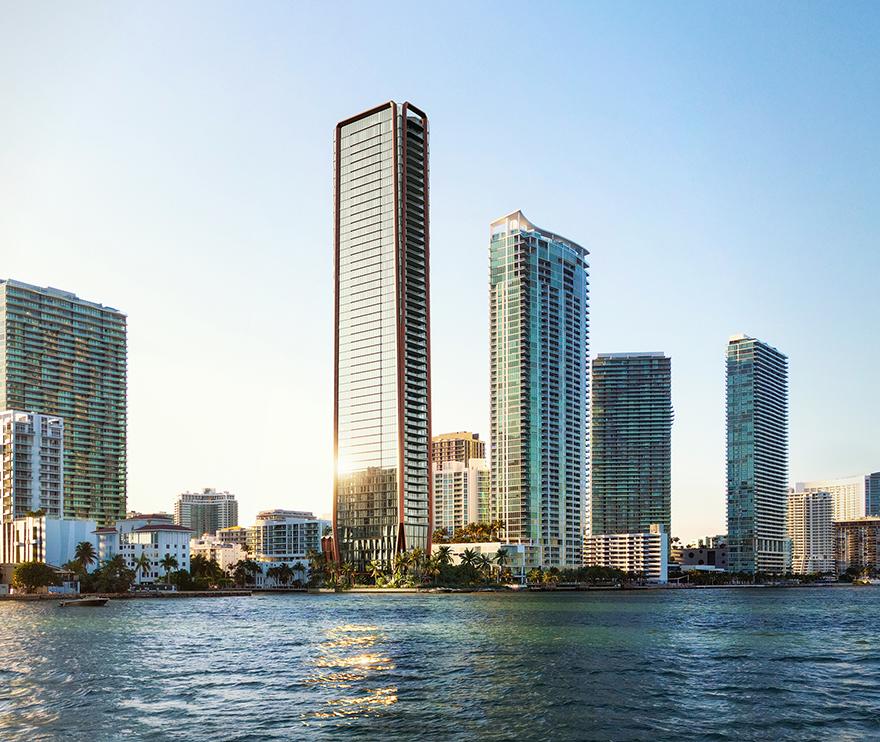
Miami has one of the most international buyer pools in the U.S. luxury condo market. There are no restrictions on foreign nationals purchasing Miami real estate — no visa requirement, no residency requirement, no nationality restriction. Most major Miami developments, including Villa Miami, have purpose-built sales infrastructure for international buyers, including multilingual advisors, structured deposit schedules in USD wire, and cross-border closing coordination.
What you need before contracting
- Passport — primary identification.
- ITIN (Individual Taxpayer Identification Number) — for U.S. tax reporting. Obtained via IRS Form W-7.
- U.S. bank account — for closing and ongoing condo dues. Most major U.S. banks open accounts for foreign nationals with a passport and proof of address.
- Source-of-funds documentation — for the wire and AML compliance.
- Cross-border tax & legal advice — before deciding on ownership structure.
How foreign buyers pay
At Villa Miami's price point, most foreign buyers pay all cash in USD via wire. Financing for foreign nationals exists through select U.S. private banks (Citi, JPM, HSBC, BNY, City National, etc.) and typically requires 30–40% down with documentation of liquid net worth, offshore income, and U.S. banking relationship. Wires must clear U.S. anti-money-laundering review, so allow time and full documentation.
Ownership structures
- Personal name — simplest. FIRPTA withholding at sale. Direct U.S. estate-tax exposure for non-resident aliens.
- U.S. LLC — privacy, liability protection, easier title transfer. Tax treatment depends on owner.
- Foreign-grantor trust or foreign corporation — used for estate-tax planning by buyers from countries without a U.S. estate-tax treaty. More complex; needs cross-border counsel.
The right structure depends on your home country, total U.S. exposure, and estate plan. Talk to a cross-border tax attorney before signing.
Taxes
- Property tax — Miami-Dade County, roughly 1.5–2% of assessed value annually. No homestead exemption for non-residents.
- Income tax — federal income tax on any rental income; Florida has no state income tax.
- FIRPTA — at sale, the buyer must withhold 15% of the gross sale price and remit to the IRS. Refundable against actual gain when you file your final U.S. tax return.
- Estate tax — material exposure for non-resident aliens without proper structuring. Plan ahead.
Why Villa Miami works for international buyers
- Edgewater bayfront — central to Miami's dining, Design District, Wynwood, and MIA airport.
- Concierge + MFG residential — full-service hospitality that supports part-time international ownership.
- Materially limited inventory — scarce supply supports resale liquidity for foreign owners exiting.
- Private bayfront dock — direct boat access from building.
- Italian thermal spa — full residential wet-circuit.
To go deeper, see the pre-construction buyer guide, the deposit structure guide, floor plans, and pricing.
Frequently Asked
Can foreign nationals buy a condo in Miami?
Yes. The United States places no restrictions on foreign nationals purchasing residential real estate in Miami. Foreign buyers represent one of the largest segments of Miami's luxury condo market and are welcomed by every major developer, including Villa Miami.
Do I need a U.S. visa or green card to buy?
No. You do not need a visa, green card, or U.S. residency to purchase a Miami condo. You do need a passport, an ITIN (Individual Taxpayer Identification Number) for tax reporting, and U.S.-based banking for the transaction.
How do foreign buyers typically pay?
Most foreign buyers at Villa Miami's price point pay all cash via wire transfer in USD. Financing for foreign nationals is available through select U.S. private banks — typically 30–40% down with documentation of liquid net worth and offshore income. Wires must clear U.S. anti-money-laundering review.
What ownership structures do foreign buyers use?
Common structures: (1) personal name — simplest, FIRPTA withholding at sale, (2) U.S. LLC — privacy and liability protection, (3) foreign-grantor trust or foreign corporation — estate-tax planning. The right structure depends on your home country, total U.S. exposure, and estate plan. Consult a cross-border tax attorney before contracting.
What taxes do foreign buyers pay?
Three main categories: (1) annual Miami-Dade property tax (~1.5–2% of assessed value), (2) federal income tax on any rental income, and (3) FIRPTA withholding at sale (15% of gross sale price, refundable against actual gain). Florida has no state income tax. Estate-tax exposure for foreign buyers without proper structuring can be material — plan ahead.
Is Villa Miami good for foreign buyers?
Yes. Villa Miami's combination of Edgewater bayfront, MFG residential hospitality, materially limited inventory, and concierge-led service is well-suited to international owners who use Miami part-time. The private bayfront dock and Italian thermal spa support a true lifestyle residence, and resale liquidity in the branded-residence segment is strong for foreign owners exiting.
What documents does a foreign buyer need to purchase a Miami condo?
Five items: a valid passport, an ITIN obtained via IRS Form W-7, a U.S. bank account for closing and ongoing dues, source-of-funds documentation for the wire and anti-money-laundering review, and cross-border tax and legal advice on ownership structure before contracting. No visa or green card is required.
How long does it take to get an ITIN?
An ITIN typically takes 8 to 12 weeks to issue after IRS Form W-7 is filed, so foreign buyers should start the application early in the contract-to-closing window rather than near closing.
Can a foreign buyer get a mortgage in Miami?
Yes. Select U.S. private banks lend to foreign nationals at roughly 30–40% loan-to-value, requiring documentation of liquid net worth, offshore income, and a U.S. banking relationship. Most buyers at Villa Miami's price point instead pay all cash in USD by wire.
This guide is informational and not legal or tax advice. Foreign buyers should consult cross-border counsel before contracting.
Information on this page is provided by Kyle Gilligan, a licensed Florida real-estate professional affiliated with Douglas Elliman Real Estate. Pricing, deposit, HOA, and availability figures are supplied by the Villa Miami sales team, change without notice, and are confirmed in writing at contract. This is an independently operated website and is not the developer’s official site.
A limited collection of bayfront residences in Edgewater.
Contact us to learn more about current availability, floor plans, and pricing for specific residences at Villa Miami, 710 NE 29th St, Edgewater.
Inquiries are handled by Kyle Gilligan. Typically a same-day response.