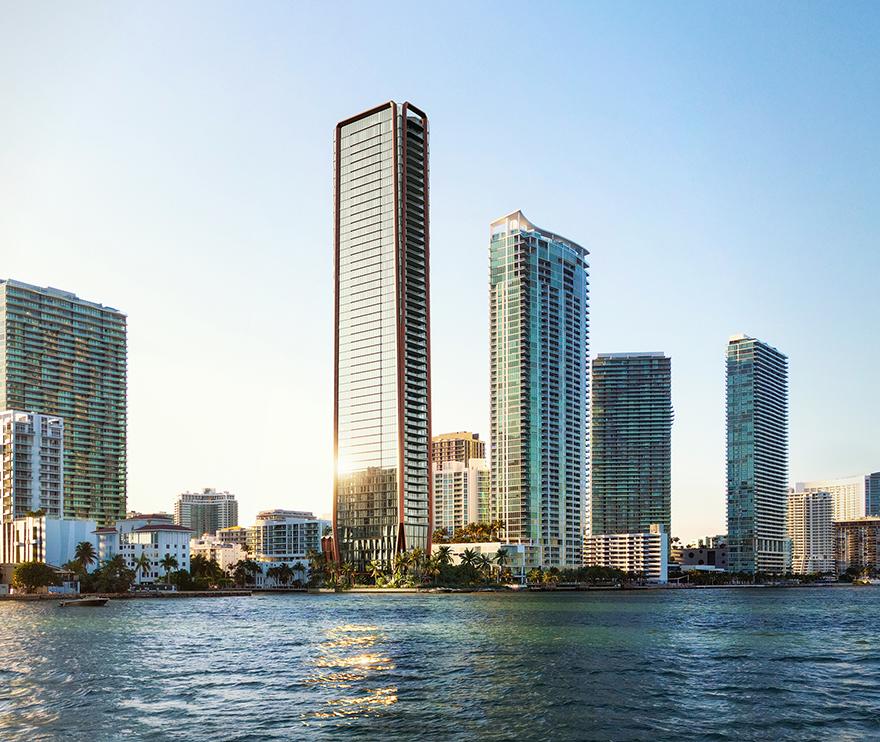
Why Villa Miami Is Miami's Top Pre-Construction Choice Right Now
In a Miami market that is punishing oversupply and rewarding true scarcity, Villa Miami sits in the segment most likely to hold value — a limited, single-program bayfront building with a world-class development team and operator-run hospitality.
Independent real-estate website · Inquiries handled by Kyle Gilligan · Same-day response
Why Villa Miami is the exception
The honest starting point for any 2026 Miami pre-construction buyer is simple: not all projects are the same. Large-inventory towers in oversupplied submarkets are negotiating. Limited, single-program buildings on non-replicable sites are transacting. Villa Miami belongs decisively in the second category — and that is why it stands out as the strongest pre-construction purchase in Miami right now.
- Materially limited unit count across the full residential program — the whole project is smaller than the remaining unsold inventory of several large-tower comps.
- Single-program — no hotel component. Amenity, F&B, and service capacity is calibrated to a fixed resident population rather than shared with rotating hotel guests.
- Non-replicable Edgewater bayfront parcel on Biscayne Bay with direct frontage and downtown skyline exposure — Edgewater has very little remaining true bayfront land.
- Well-capitalized developer partnership — Terra Group with One Thousand Group, with a Miami delivery track record that includes Eighty Seven Park and Grove at Grand Bay.
- Operator-run hospitality with Major Food Group — not a licensing brand, an actual F&B operator on-site.
- Diversified UHNW buyer pool — the project is not dependent on any single foreign market for absorption.
None of this makes Villa Miami immune to a broader downturn. It does place the project in the segment historically most likely to hold pricing — and that is a specific, checkable claim rather than a marketing promise.
The concerns are real — but they are not the whole story
Three things are true about the current Miami condo market, and any credible analysis has to acknowledge them:
- Absorption has slowed in oversaturated submarkets. Parts of Brickell, Sunny Isles, and the downtown-adjacent inventory-tower belt have a lot of pre-construction pipeline chasing a smaller pool of active buyers than 2021–2022 saw. Incentives — closing credits, HOA holidays, design allowances — are functionally price adjustments.
- Foreign buyer demand has softened at the mid-luxury tier. A strong US dollar, rate environment, and geopolitical uncertainty have weighed on historically active pools. This matters most for projects whose absorption relied on heavy foreign presale.
- Pre-construction always carries real risk. Delivery delay, scope change, developer capitalization, and market timing between contract and closing are amplified in a softening cycle.
The key point: these concerns are concentrated in large-inventory, oversupplied submarkets. They do not apply uniformly — and they apply least to scarcity-driven projects like Villa Miami, where limited supply, non-replicable frontage, and a diversified buyer base change the risk profile.
"The Miami condo market" is several different markets
The single most important distinction for a 2026 buyer is between inventory-heavy towers and limited, single-program buildings. Both are called "pre-construction condos." They behave very differently in a soft market.
An inventory-heavy tower is a 200–400 unit building with a multi-year sellout timeline. When the market softens, the developer still needs to move remaining inventory to hit financing milestones and close the project out. Every discount to move a new unit resets the comparable price for every remaining unit — and for the resale market of the already-closed units. Buyers who contracted early can find themselves competing at resale against the developer's ongoing sales program.
A limited, single-program building is a materially smaller residential-only project — often under 100 units, sometimes under 50. When the entire project supply is smaller than one competitor's remaining unsold inventory, the supply-demand dynamic is fundamentally different. There is no ongoing developer sales program undercutting resale, price discovery happens in private transactions between owners rather than in a public price list, and buyers self-select for lower price sensitivity and lower contract fallout.
The scarcity mechanic in a soft cycle
Softening markets punish supply and reward scarcity. This is not a real-estate cliché — it is what actually happens in the data during every Miami cycle we have record of. In 2008–2011, the projects that held value best were the small, architect-led, non-replicable-site buildings. The projects that took the deepest markdowns were the large-inventory towers built for speculative absorption.
The reason is structural rather than sentimental. In a soft cycle, the marginal buyer has options. A 300-unit tower with 40% still unsold competes against every other 300-unit tower with unsold inventory — the buyer's next-best alternative is close, obvious, and priced aggressively. A 50-unit building on a non-replicable bayfront parcel has no close comparable — the buyer's next-best alternative is a fundamentally different product, not a discounted version of the same one.
Practical buyer guidance
Pre-construction is the right instrument for most scarcity buyers, but it is not right for every situation. Three practical checks before moving forward:
- You do not need the capital liquid within 24 months. Pre-construction is not liquid. Deposits are staged, closing is at delivery, and any early exit before closing is at the developer's contractual discretion.
- You can absorb delivery-date slippage. A 6–12 month push is not unusual even for well-run projects. Build that into your planning rather than treating the projected close as a hard date.
- You are targeting a scarcity-positioned project. Large-inventory towers in oversupplied submarkets are currently under the most pricing pressure. They can still work, but they require conservative underwriting.
What to actually underwrite before contracting
- Developer balance-sheet track record. Not just past deliveries — current pipeline load and construction-financing structure. A well-capitalized developer with modest concurrent exposure is very different from a developer with three large towers under simultaneous construction.
- Offering-document reading, not summary reading. Read what is contractually guaranteed versus what is marketing. Amenity programs, operator relationships, and finish specs are often described more assertively in the brochure than in the binding contract.
- HOA budget realism. Pro forma HOA budgets for pre-construction projects are often understated. Model a 20–30% upward adjustment as your base case, particularly for buildings with meaningful hospitality and F&B service.
- Deposit-schedule sizing. Structure the deposit so a delayed close, a market correction, or a personal-circumstance change does not force a decision under pressure. If a 20% deposit at contract is uncomfortable, the project size may be wrong for your position.
- Supply position of the specific project. Total unit count, current sold percentage, competing pipeline within a one-mile radius, and how much of the developer's sellout is still ahead of them. This is the number that matters most for how the project behaves through a soft cycle.
The short answer
For a large-inventory tower in an oversupplied Miami submarket, this is a cautious moment — buy only after conservative underwriting. For Villa Miami — a limited, single-program building on a non-replicable Edgewater bayfront site with a well-capitalized developer and a diversified UHNW buyer pool — the current environment is closer to opportunity than to risk. The right question is not "is it a good time to buy Miami pre-construction?" — it is "is this the right project in this market?" On that test, Villa Miami is the clear answer.
For more, see the Miami pre-construction buyer guide, the deposit-structure breakdown, the Villa Miami value case, and current Villa Miami pricing.
Frequently asked
Is now a good time to buy pre-construction in Miami?
It depends entirely on which project. 'The Miami condo market' is not one market — 200–400 unit inventory towers and small, single-program bayfront buildings are behaving very differently right now. In late-2025 and 2026, large-inventory towers in oversupplied submarkets are seeing extended absorption timelines, incentives, and buyer hesitation. Scarcity-driven projects with materially limited unit counts and non-replicable frontage are still transacting at or near list. If you are underwriting a specific building rather than the market in aggregate, the honest answer is: it can be a very good time or a very poor time depending on the project's supply position.
Is the Miami condo market crashing?
No — but it is softening in specific segments, and that distinction matters. Reports of slower absorption and price adjustments are concentrated in submarkets with heavy new supply (parts of Brickell, Sunny Isles, and downtown-adjacent inventory towers) and in the resale market for older, non-branded buildings facing structural-inspection and reserve-funding pressure. The ultra-luxury branded segment with limited unit counts has been more resilient. Anyone claiming the entire market is either crashing or booming is not looking at it carefully.
Will Miami pre-construction prices drop in 2026?
In oversupplied towers, incentives are already effectively a price adjustment — closing credits, HOA holidays, and design allowances are common. In small, limited-inventory projects with strong developer capitalization, list prices have generally held. A broad-based nominal price drop across all Miami pre-construction is not what the data supports; a bifurcation between well-positioned scarcity plays and inventory-heavy towers is.
What about foreign-buyer hesitancy?
It is real, and it deserves an honest answer rather than dismissal. A strong US dollar, higher-for-longer rates, and geopolitical uncertainty have slowed some historically active foreign buyer pools. Latin American demand into Miami has softened at the mid-luxury tier; European demand for trophy assets has held up better. The net effect on any specific project depends on which buyer pool that project depends on. A building whose absorption strategy required heavy foreign presale is more exposed than a building drawing from a diversified US and international UHNW base.
Isn't Miami oversupplied?
Parts of it, yes. Miami has a large pre-construction pipeline concentrated in a few submarkets. Oversupply is a real risk for buyers of the 200th unit in a 400-unit tower competing against 30 similar listings in a one-mile radius. It is a much less relevant risk for a limited, single-program building where the entire project supply is smaller than one competitor's remaining unsold inventory. Aggregate pipeline numbers hide this — evaluate the supply position of the specific project, not the metro.
Why do limited-inventory projects behave differently in a soft market?
Two reasons. First, price discovery: in a 300-unit tower with 40% still unsold, every new discount resets the comp for the remaining inventory and for the resale of already-closed units. In a 50-unit building that sold out during construction, there is no ongoing developer sales program undercutting resale — the next transaction is a private one between two owners. Second, buyer intent: buyers at genuinely scarce, architect-led projects are less price-sensitive and less likely to walk from a deposit, so contract fallout in a soft cycle is lower.
How is Villa Miami positioned in this market?
Villa Miami is a materially limited residential program on true Edgewater bayfront, with Terra Group / One Thousand Group as developer, ODP Architecture, Charles & Co interiors, and Major Food Group as operator. The relevant characteristics for a soft-market analysis are: small unit count, single-program (no hotel component sharing amenity or F&B), non-replicable bayfront parcel, well-capitalized developer with a Miami delivery track record, and a diversified UHNW buyer pool rather than dependence on any single foreign market. None of that makes the project immune to a broader downturn — but it places Villa Miami in the segment most likely to hold pricing rather than in the segment facing the most incentive pressure.
When is pre-construction NOT a good idea right now?
Three cases: (1) you need liquidity within 24 months — pre-construction is not liquid capital; (2) you are uncomfortable with delivery-date risk and cannot absorb a 6–12 month push; (3) your target is a large-inventory tower in an oversupplied submarket where the developer is still trying to close out the initial sellout — that is the segment currently under the most pricing pressure and should be underwritten conservatively.
A limited collection of bayfront residences in Edgewater.
Contact us to learn more about current availability, floor plans, and pricing for specific residences at Villa Miami, 710 NE 29th St, Edgewater.
Inquiries are handled by Kyle Gilligan. Typically a same-day response.